



There’s shifts happening in marketing. Some of it is loud. Some of it is more quiet.
Scroll anywhere on LinkedIn or in DMs and you’ll hear the same thing: marketing feels harder than ever.
Playbooks that once worked don’t hit the same. AI has raised expectations from the board. “Do more with less” now quietly includes “AI should be able to help you do even more, with even less” It’s a lot. And we’re all feelin’ it, right?
I’ve been noticing about 10 quiet shifts in marketing growth for my own reflection. Some technical, some structural. I personally find that exploring the non-obvious, non-black-and-white areas for performance can be major growth levers, not just the shiny ones you see on LinkedIn. One of those more abstract views keeps nagging at me, especially from a leadership standpoint. It’s not revolutionary or new, but I think it’s quietly blocking growth on a lot of teams.
I’m living it myself. There’s so much I want to learn and go deep on — I can feel the difference between weeks where I protect this and weeks where I don’t. The work quality isn’t even close.
I just had a conversation with another marketing leader this week. They feel like there’s so much they should know deeper, but they don’t know where to put their focus. We’re all feeling this. I know I am, too.
The shift? Lack of focus.

Why Focus Could Be Your Biggest Growth Lever Right Now
Marketing requires deep, uninterrupted focus. You need to ship great deliverables with impeccable strategy. This combo requires deep focus. If your team can’t truly focus, you’re not only burning them out, but they’re unable to get shit done.
I’d even argue that with AI, being able to critically think before deploying is going to become even more important.
But focus isn’t just about productivity. It’s about giving your best bets enough runway to actually work.
The teams pulling ahead right now aren’t doing everything. They’re doing fewer things, better — and staying with them.
Here’s what’s making this harder right now: there’s a near-frantic energy (inside + outside of companies) around what teams should be doing, what they should be advancing, what AI they should be adding. It’s starting to feel like whack-a-mole for ICs (and even leaders) to know where to put their heads down and focus.
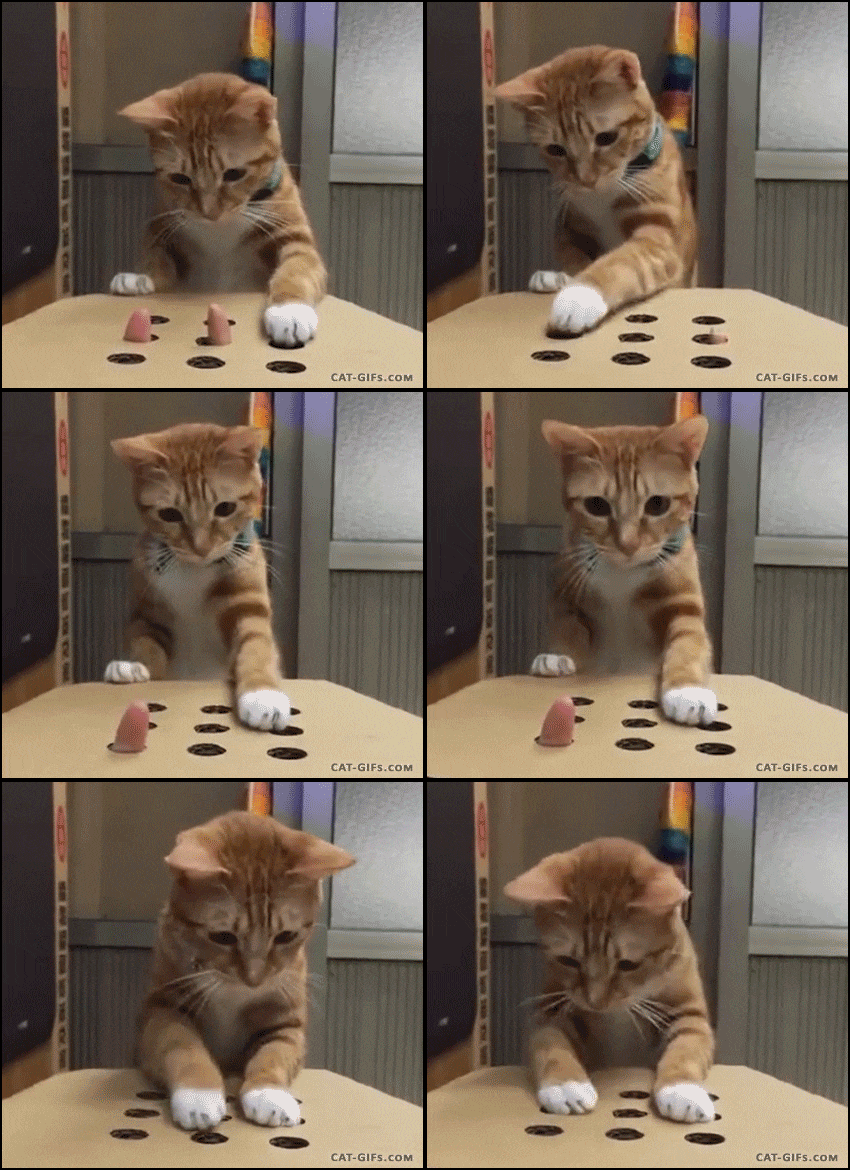
There’s so much information to consume that focus becomes the difference between deep understanding and surface-level awareness that doesn’t make a true dent.
I’m living this myself. There’s so much I want to learn in all areas of my life. But I can’t do it all. I could keep up with the latest Meta ad algorithm changes for targeting. Or, I could go deep on AI agents for equipping teams to execute faster. You have to choose.
You can’t know everything, no matter how much AI is out there. It’s actually creating information overload, not solving it.
The same is true for your teams and companies. They could vibe-code a CRM with AI. Can they? Sure. Should they, instead of advancing your actual product? Debatable. Every “we could do this” is stealing focus from “we should be doing this.”
Are you nodding your head aggressively yet?!

So what’s killing focus?
I’m seeing a couple of culprits that are especially problematic:
Communication norms inside teams
Startup and open-office culture started this: randomly tapping someone’s shoulder when you wanted an answer right then.
Slack and Teams in a remote/hybrid world amplified it. These tools were supposed to reduce emails and written communication. Instead, we’re reading more written communication than ever, with the added expectation to answer immediately. It’s stealing so much of our time.
You see your leader dropping random links, pinging you every other hour, someone cross-departmentally DM’ing you. You feel like you should be answering everyone, in a timely manner.
Most teams haven’t explicitly stated (and documented) what their communication norms are within their company.
Communication norms: the agreed-upon rules for how a team communicates so work doesn’t get chaotic. It reduces ambiguity.
Internal politics
I’m going to say the quiet part out loud: internal politics plays a huge role here.
Leaders see a post about how X tactic scaled a company. Or a board member mentions something that worked at a sister company. With good intentions, marketing gets asked to “try it.” We all know this game.
And if you’ve operated inside a company before, you know you can only say no so many times (unless you work for truly unicorn companies/leaders). IYKYK ;)
Doing more, without having space to think
People are being asked to do more work, learn AI for the first time, hit audacious goals, and stay creative, all at once. But focus doesn’t come from asking people to work harder. It comes from having a tight hold on priorities, and SPACE!
If you want your team to do the work well, have space to reflect and be creative (a mandatory for good work!), and actually learn and apply AI, then someone has to protect time for all three. The team needs the space protected to think and be creative. But our calendars are packed more than ever, and the work is piling up. For most, the only time to do this is after hours late at night. I know that was my case.
Quick context switches cost real focus. There’s plenty of research out there that says it takes ~25 minutes to regain focus after being interrupted or context switching. [ Stat proof]
Stop Talking About the Problem, Let’s Talk Solutions!
Here are a 9 tactical ways to fix this (if you know me, you know I’m a big listicle/framework person, before it was a tell-tale AI sign). Some are foundational, some are habit changes. All of them work better when leaders enforce them, but ICs can also implement several of these on their own.
1. Implement project management and time tracking systems
Most marketing teams I’ve worked with have no project management systems at all. They’re still operating with scrappy startup mindsets, trying to move fast.
This is where tight project management quietly becomes a growth lever. Start with an MVP approach and refine over time. You don’t need a complex system out of the gates.
Time Tracking
I used to hate this. But it’s helpful. Run a pilot for two weeks with yourself and your team (Toggl is great + free!) to see where time is actually going. Set safe psychological guardrails so the team doesn’t feel they have to “pad” their time. You can either identify the problem buckets before or work with the raw data afterwards, just have everyone be as detailed as possible.
Here’s a specific AI win you can embed into your 2026 roadmap: use the time tracking baseline to set a goal like “reduce team admin time by X% with AI.” This gives your team the space to actually learn AI for efficiency, then you build from there.
When teams can see where time is going, it becomes easier to say no, spot what’s eating focus, and apply AI where it will actually help.
I’m doing this for myself personally right now.
2. Create team communication norms
Document how your team communicates so work doesn't get chaotic. Here's what to define:
Response expectations
Which channels are for what (Slack vs. email vs. phone call vs. project management tool). What counts as urgent, and how do you label it? What’s the expected response time?
Examples: Slack: 24 business hour response unless marked urgent. Slack has designated channels with norms documented. “Urgent” must be explicitly labeled in messages. Slack messages must clearly state the context, need, expected action, people involved, and timelines. You’ll have to correct for awhile in Slack to build the habit, this will take some time, but it helps so much.
Meeting norms
What meetings exist and why? Every meeting needs an agenda. Meetings must be action-oriented or brainstorms, not status updates.
Work intake process
How does new work enter the system? Who approves it? What happens when capacity is full?
Escalation path
What happens if something is blocked? How and when do you escalate?
Documentation standards
Where do decisions live? Where do briefs live? Where do final assets live?
Availability & focus protection
Are there no-meeting blocks or days? Is deep work time protected, and how? When is it okay to interrupt someone?
3. Resist Slack one-offs
When you’re deep in work, it feels natural to Slack a quick comment or question as it comes up. For some people, this works fine. For others, it creates interruption and cognitive overload.
Instead: Slack yourself the comments (or document them elsewhere), compile everything, and send at the end of the day or in the appropriate channels. Better yet, when you can, just do the next step (1-1 documents).
This small shift protects your team’s focus and models the behavior you want to see. I was a huge culprit of this as a manager, and got incredible feedback how it was being perceived by a direct report. That was such a great reflection moment for me to rethink how it was coming across: not timely or helpful, but overwhelming.
4. Use 1-1 documents as a running list of feedback, questions, and updates
These are unpolished places where both parties can add thoughts throughout the week -- things they want to note, ask, or talk about. A lot of the notes end up being worked on async when the other person sees them. Most feedback and communication can wait until a 1-1.
As an IC, your manager would love you taking initiative and doing this for them.
But don’t only use 1-1s for this. They should never just be status updates. (Leadership topic for a different day!)
5. Create a program guardrails
Define the container(s) of work for your team and the company. Most marketing noise happens because the work isn’t clearly bucketed, communicated, and/or understood. If you haven’t explicitly defined your strategy, everything feels urgent and everything feels like it should be added in.
When you clearly articulate why you’re working on what you’re working on -- and just as importantly, why you’re NOT working on other things -- prioritization gets easier. Requests have somewhere to land. You can say, “that fits inside X program,” or “that doesn’t align to this quarter’s focus.”
Good guardrails protect agility. They create a safe container for experimentation because the team knows which programs they’re optimizing and where experiments belong, instead of randomly layering new ideas on top of unfinished work.
Prioritization leads to focus.
6. Implement no call days
Internal and external, no call days are gold. This works best when leaders enforce it as a team norm.
Fridays are my favorite for this, it lets you and the team go deep and focus on completing work before clocking off to enjoy the week. It also tends to be a great day for thinking, as it’s lighter.
Find the day that works best for your team and try it for a week.
7. Bake in “thinking” time for workloads
If you do step 1 (time tracking), you can get much more strategic about forecasting work and prioritizing thinking time. But even without it, find a way for your team to prioritize this time.
For the team: Options include calendar blocking, having them block their own calendars, or making it a deliverable they report on weekly. If they didn’t make time for it, figure out why and how you can remove that barrier.
For yourself as a leader: Run focus cycles to identify what you’re choosing to go deep on versus what you’re letting go. Pick 1-2 strategic learning areas per quarter where deep understanding will compound - then ruthlessly ignore the rest at a surface level. This is how you avoid the information overload trap while still making progress on what matters.
As a leader, model this behavior. If you do standups in Slack or 1-1s, talk about your focus cycles - what you’re going deep on this quarter, what you’re intentionally skipping, what insights you’re gaining. Make it known that this is important, especially as critical thinking, creativity, and judgment will be the drivers for the AI-future when much of the manual tasks are automated.
8. Dig for feedback and reflection
First: Reflect on yourself
How great is your own personal focus? What’s been interrupting it the most, and what helps you get to deep focus?
Then: Ask your team for feedback
This is critical. Ask in a 1-1 how they feel their focus has been (ensure it’s safe to answer honestly - your own reflection can open that door). What may be blocking it? How can you and the team improve for them? Compile this from everyone and manage individually as well.
9. Decide and commit to focus areas
Here’s what I’m doing: Fridays are now protected time for me: deep focus, weekly wrap-up, next-week prep, and work regroup.
A decade ago, I bought a Passion Planner. What stuck with me wasn’t the aesthetic, it was the daily design concept. You didn’t just write a to-do list. You scheduled your work into the day. You designed it.
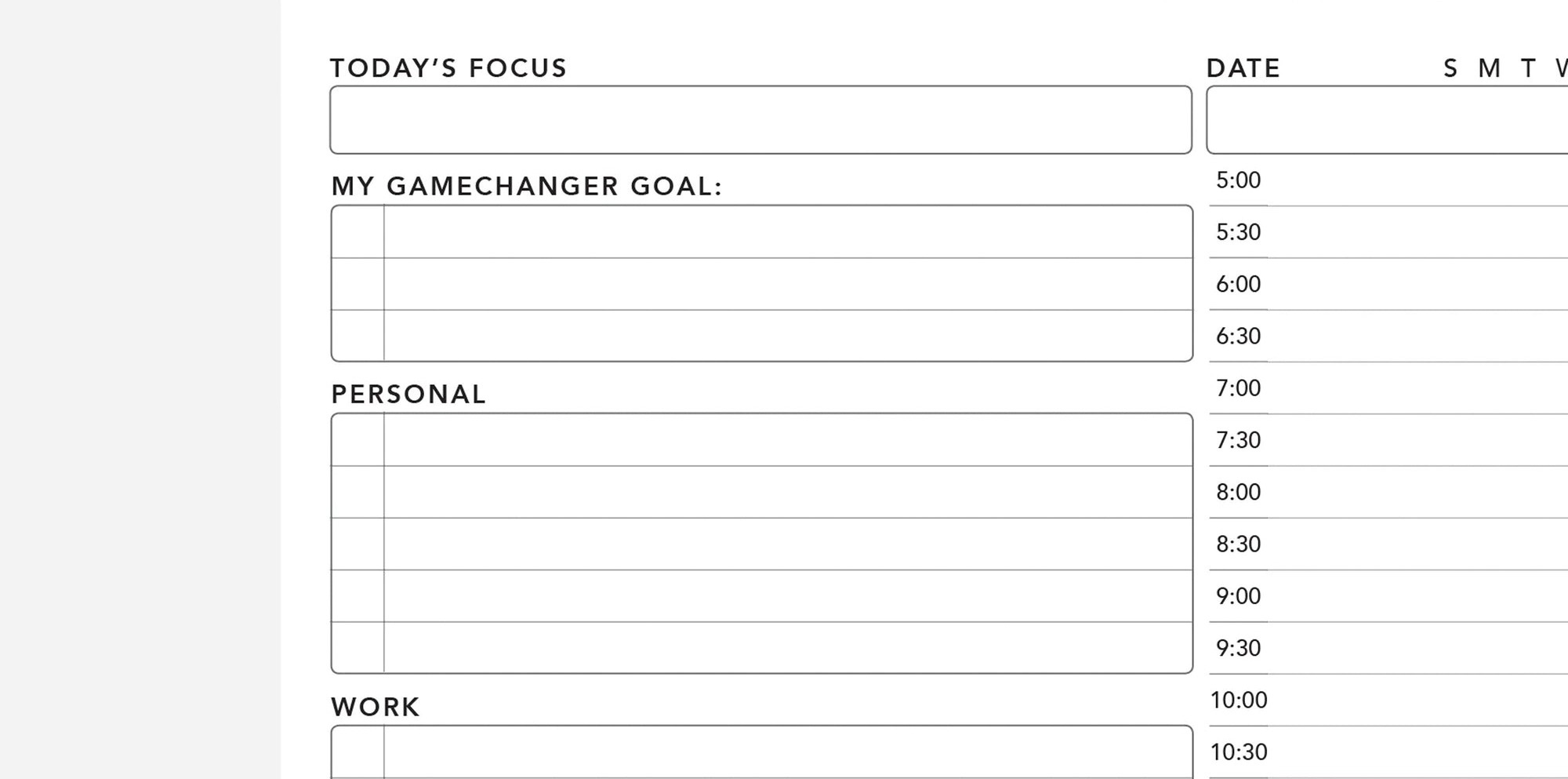
(It’s essentially time blocking (if you’re unfamiliar, here’s a good overview, and Deep Work also reinforces this approach (an evergreen topic, as this was from 2015)).)
So now, I do a weekly version of that: What’s focus for the next week? What do I need to complete next week so I can mentally clock off for the week and enjoy my kids?
Then I block the work in a separate Google calendar called “To-Do Items” as meeting blocks for myself so I can look at my calendar for the day and it’s already designed.
Will it move? Of course. Stakeholders show up. Meetings shift. Work expands. But the act of deciding first, and placing it on the calendar, keeps me from drifting.
You could take elements of this for yourself. Or bring it into team meetings. “What are we committing to finishing this week?” And then, where does it live on the calendar?
Focus isn’t accidental. It’s designed
Focus is just one of the shifts I’m seeing reshape marketing growth right now. Some of the others are more technical, some are structural. But this one I’m seeing as pattern recognition in conversations with leaders and on teams as the thing that’s quietly blocking everything else.
If you can’t focus, you can’t execute strategy. If you can’t execute strategy, nothing else matters.
Pick one thing from this list to try this week. Then let me know how it goes. Or better yet, what’s something I didn’t include here that you find helpful? What are you committing to focusing on this week/month? What topic would you like to see next? Hit reply, I read everything and want to learn from you!
*AI disclaimer: I believe in AI transparency within marketing. AI was used for image creation (you could instantly tell, right?! Be honest. Gotta keep my time in check, even if it’s coming across as a little cartoon-y still (still haven’t fully nailed this)) and in copy editing. I tend to ramble, and I use AI to take my original ideas and clean it up so you don’t get bored of me.